
Đêm Giao Thừa (Lunar New Year’s Eve) by Brian Bùi
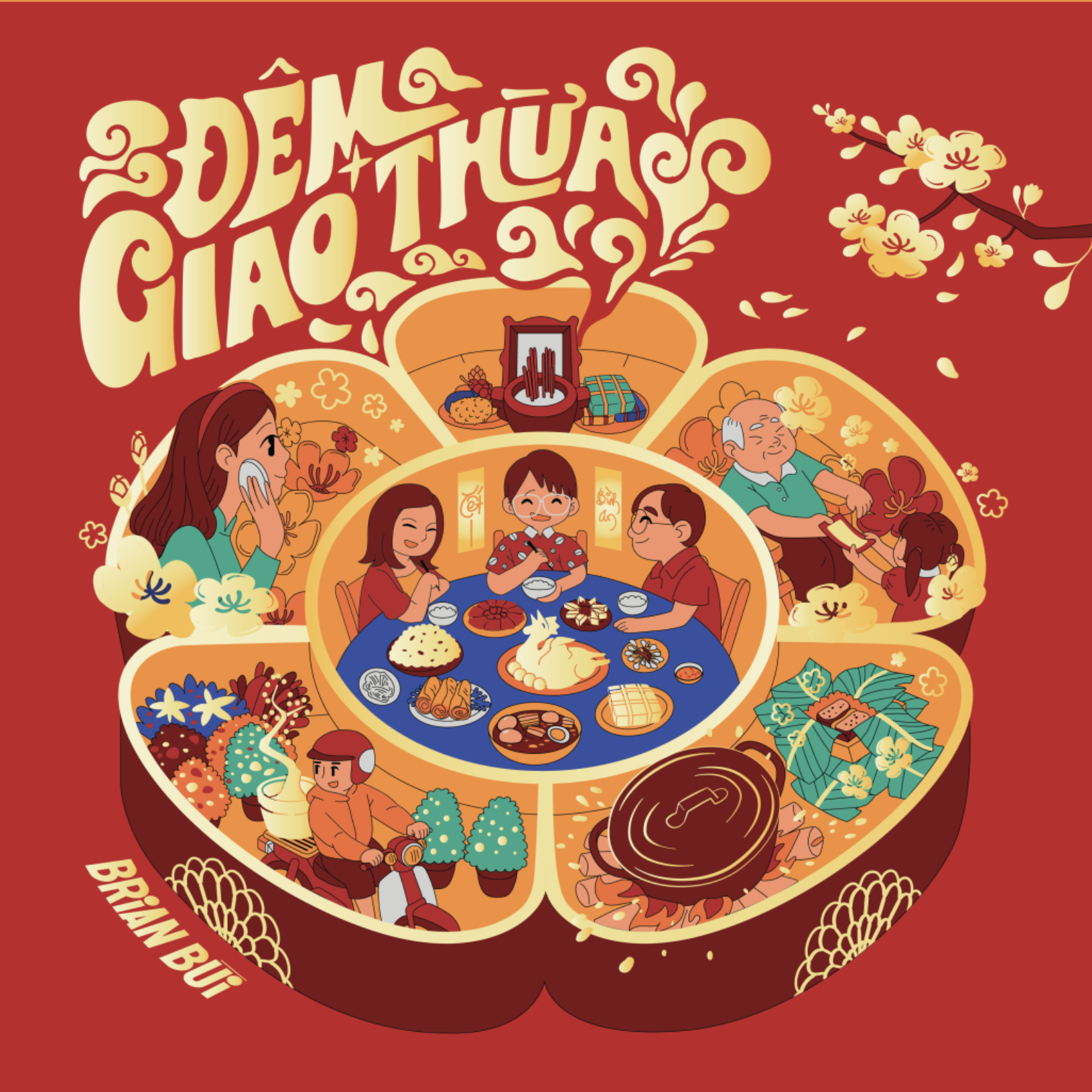
In a musical landscape where tradition and innovation are often framed as opposites, Brian Bùi’s Đêm Giao Thừa (Lunar New Year’s Eve) EP instead treats them as collaborators. Rooted in Vietnamese musical heritage but shaped by a wide range of global influences, this EP creates a sound world that feels both deeply cultural and refreshingly contemporary. Rather than presenting tradition as something fixed or museum-like, Brian approaches it as something fluid, open to reinterpretation, and capable of dialogue with genres like Latin pop, psychedelia, and modern electronic production. The result is a project that feels less like a revival and more like a living, evolving conversation between past and present.
For the uninitiated, đàn tranh is a Vietnamese traditional instrument. It is a plucked zither, meaning it features multiple strings stretched across a shallow, flat soundbox and is typically played with the fingers or small picks. One feature of these zithers is that the side of the string opposite the bridge can be pressed to control vibrato and pitch bending. To Western ears, this bending, along with pentatonic tuning, might sound similar to blues music.
Alongside traditional Vietnamese elements, Brian Bùi’s project also draws from bolero. Although originating in Cuba and spreading through Latin America, bolero also gained popularity in Vietnam during the 1970s and 1980s. Bùi further cites cha-cha, samba, and psychedelic cumbia as influences on his unique style. The EP opens with an original composition, followed by three reinterpretations of classic Vietnamese Lunar New Year songs, reimagined through this global, genre-blending lens.
The title track, “Đêm Giao Thừa (Lunar New Year’s Eve),” is Bùi’s original piece and immediately establishes the project’s identity. A Latin-inspired beat is evident from the very beginning, giving the track a sense of momentum and celebration. The đàn tranh is processed with effects that make its timbre akin to a rock electric guitar, blending nostalgia with modernity. A warm, grooving bass and catchy melody are sure to please the ears. Toward the end, hand claps enter the mix, adding a lively, communal energy that mirrors the festive spirit of Lunar New Year’s Eve.
“Plucking Lucky Buds (Hái Lộc Đầu Năm)” leans more heavily into a traditional đàn tranh sound, but is supported by a dreamy electric guitar and organ that add warmth and atmosphere. This is what gives the track its psychedelic cumbia influence. Together, these elements create a sound that feels both nostalgic and otherworldly, reframing familiar cultural motifs through a contemporary, genre-blending lens.
“Spring, Oh Spring (Mùa Xuân Ơi)” brings in the lively and celebratory energy of samba. Classical guitar and flute lines dominate the arrangement, and the melody feels especially pop-oriented and lyrical. There is a sense of openness and joy here, as if the music itself is stretching toward the sunlight after a long winter.
The closing track, “Spring Butterfly (Con Bướm Xuân),” really does sound like a butterfly fluttering about. An introduction led by bass creates a sense of mystique, while saxophone lines add a warm, inviting timbre. The frequent use of staccato and pizzicato textures evokes the image of a butterfly in motion. All the instruments blend nicely, creating a cohesive and colorful soundscape.
Overall, this project feels like both a tribute and a reimagining. Brian Bùi invites listeners into a space where tradition and experimentation coexist. For anyone curious about Vietnamese music, global fusion, or simply new sonic worlds, this EP offers an inviting entry point. It encourages listeners to hear cultural heritage not as something static, but as something alive, evolving, and ready to be reshaped for the present.